
Carbon footprint
-
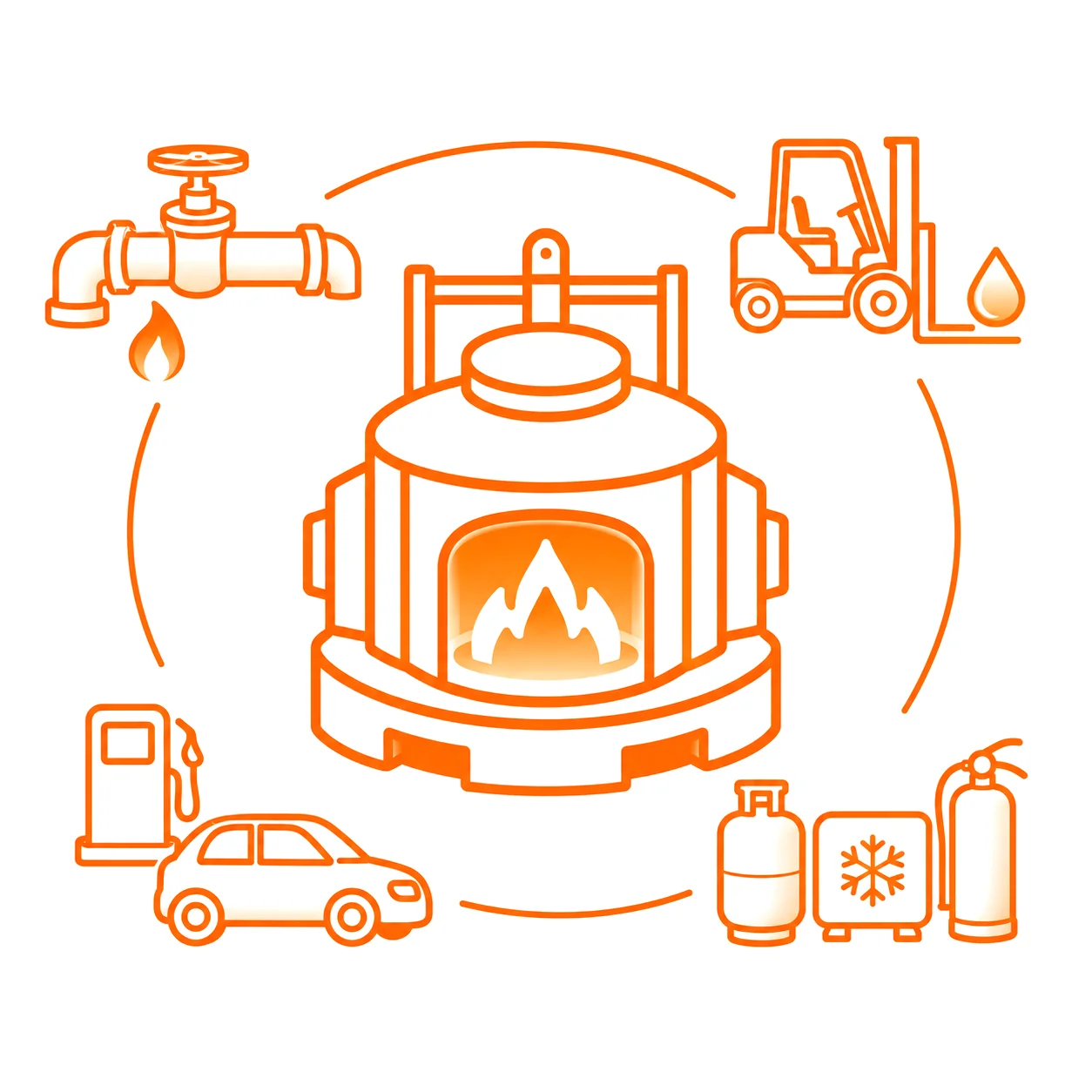
SCOPE 1: Direct emissions
These are emissions generated from sources under the company’s direct control.
At AS METAL, these emissions arise from activities required for industrial processes and include:
- natural gas used in the foundry and for heating;
- diesel used by machinery and vehicles;
- petrol used by company vehicles;
- LPG used in maintenance activities;
- refrigerants used in air-conditioning systems;
- carbon dioxide used in maintenance activities and in CO₂ fire extinguishers.
-
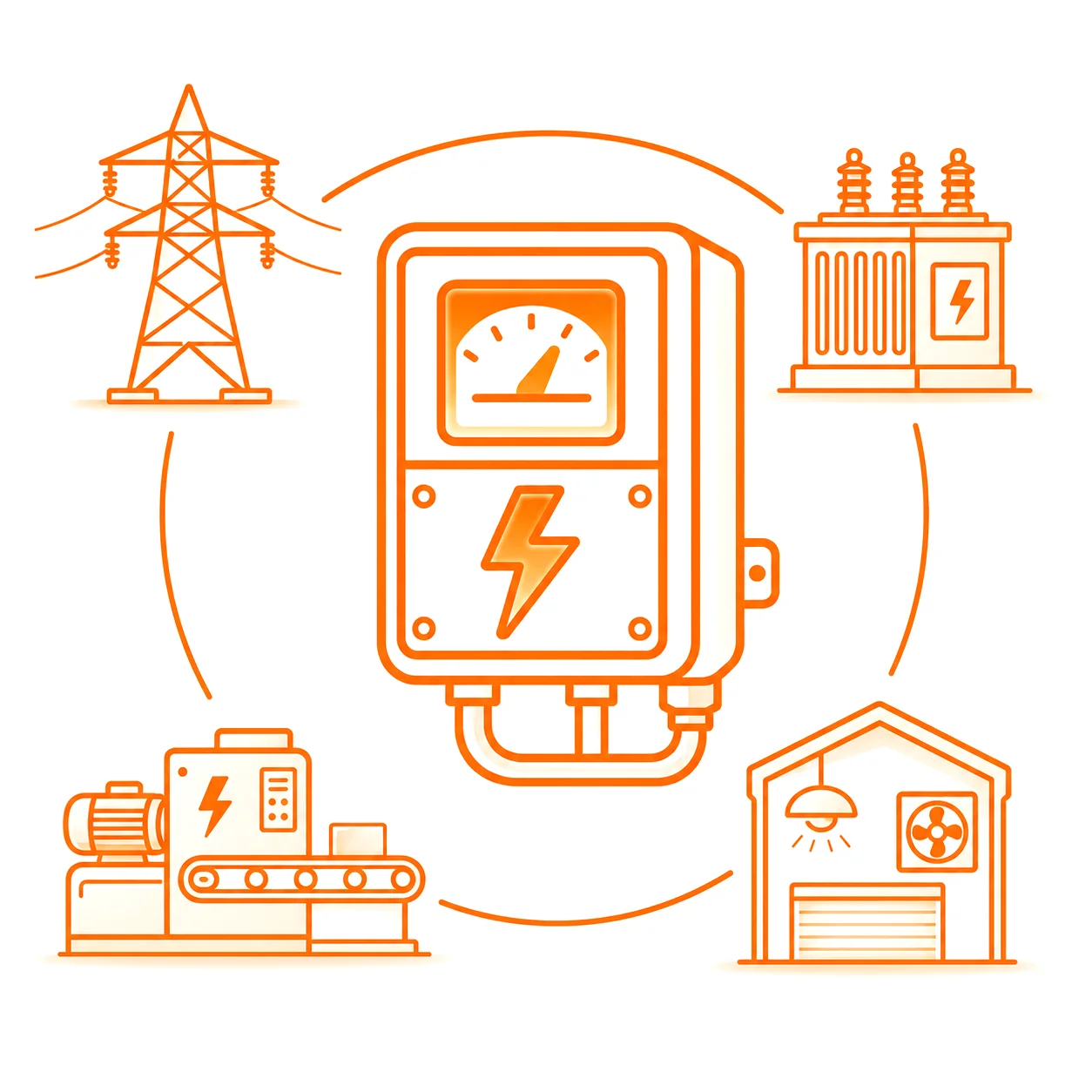
SCOPE 2: Indirect energy emissions
These emissions are associated with the generation of electricity purchased and used in the company’s operations.
For AS METAL, Scope 2 includes the electricity consumption required for production processes and the operation of industrial infrastructure.
Monitoring this indicator helps identify opportunities to improve energy efficiency and reduce the climate impact associated with energy consumption.
-
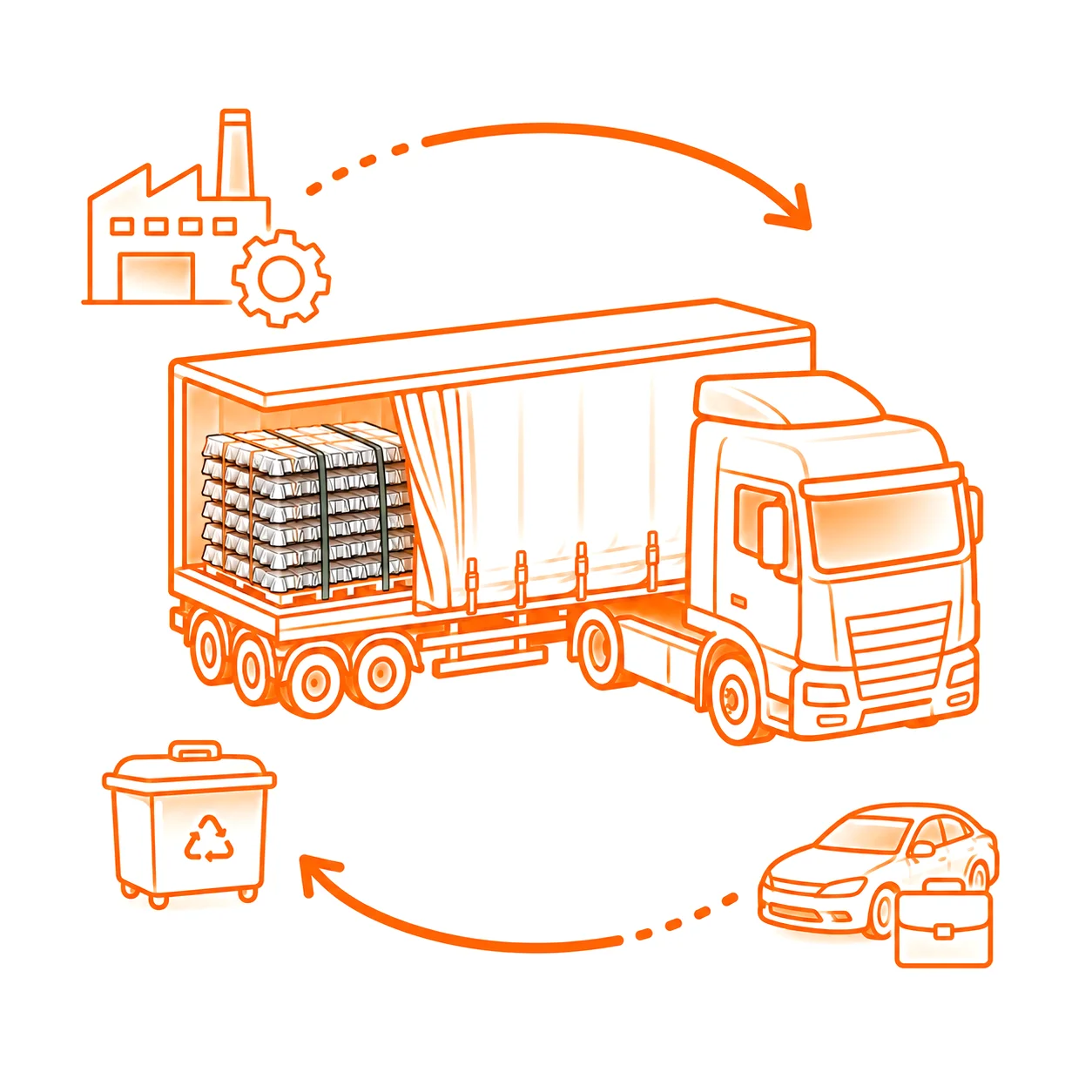
SCOPE 3: Value chain emissions
Scope 3 includes indirect emissions generated outside the company’s operational boundaries but influenced by its activities.
At AS METAL, this category represents the largest share of the total carbon footprint and includes, among other things:
- purchased goods and services;
- capital goods;
- fuel- and energy-related activities;
- transportation and distribution;
- management of waste generated by operations;
- business travel;
- employee commuting;
- upstream leased assets.
Analysing these emissions helps identify opportunities to reduce climate impact throughout the entire value chain.
Indicators – Emissions intensity
We reduce impact, not just measure it.
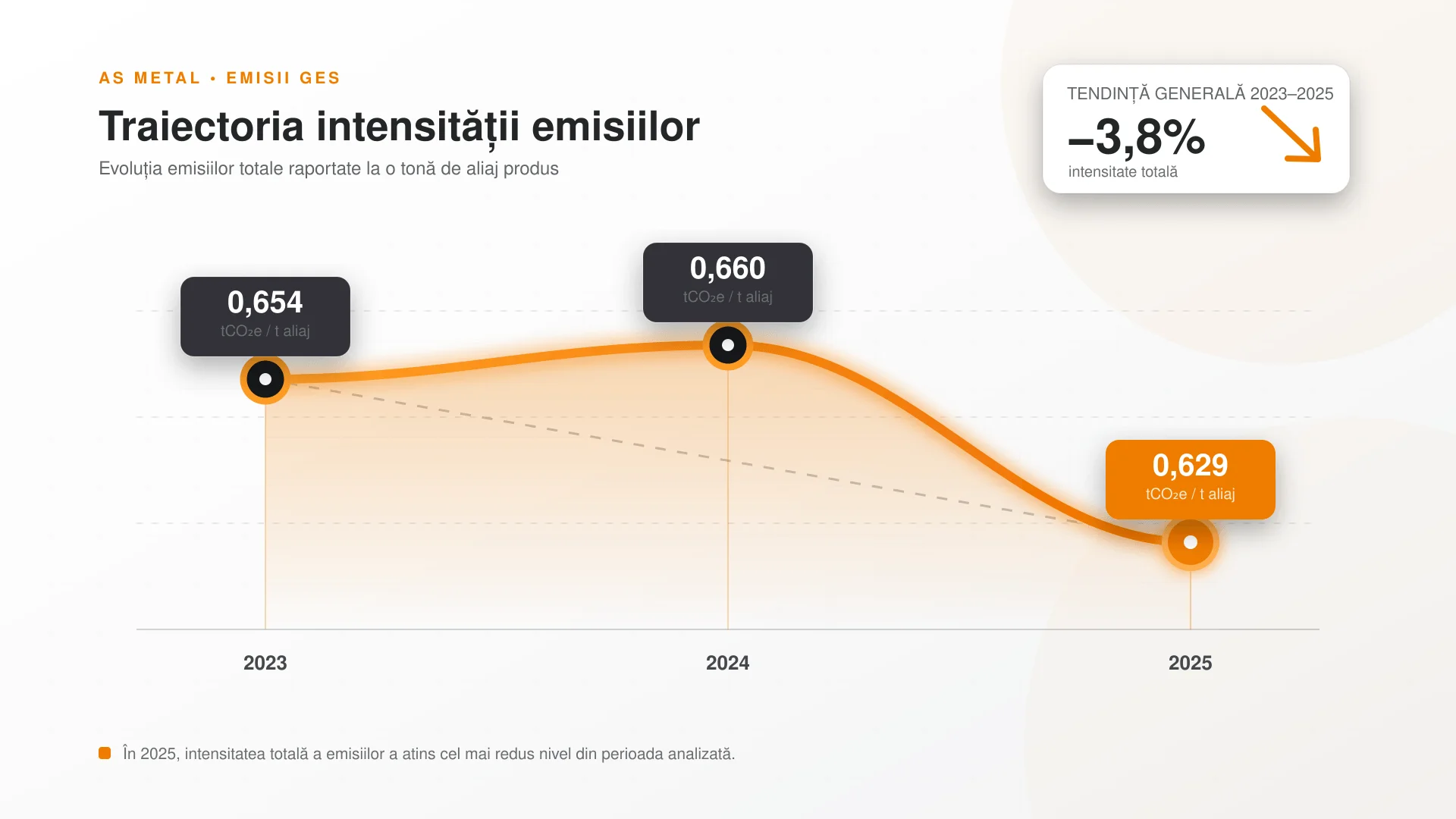
Emissions intensity expresses the amount of greenhouse gases generated for each tonne of alloy produced and is one of the most important indicators used to assess climate performance.
Annual monitoring of this indicator makes it possible to track the effectiveness of implemented measures and highlights the progress achieved through investments in modern technologies, energy efficiency and the optimisation of industrial processes.
The values recorded in recent years reflect AS METAL’s commitment to continuously reducing environmental impact and improving climate performance.
Pathway to 2050
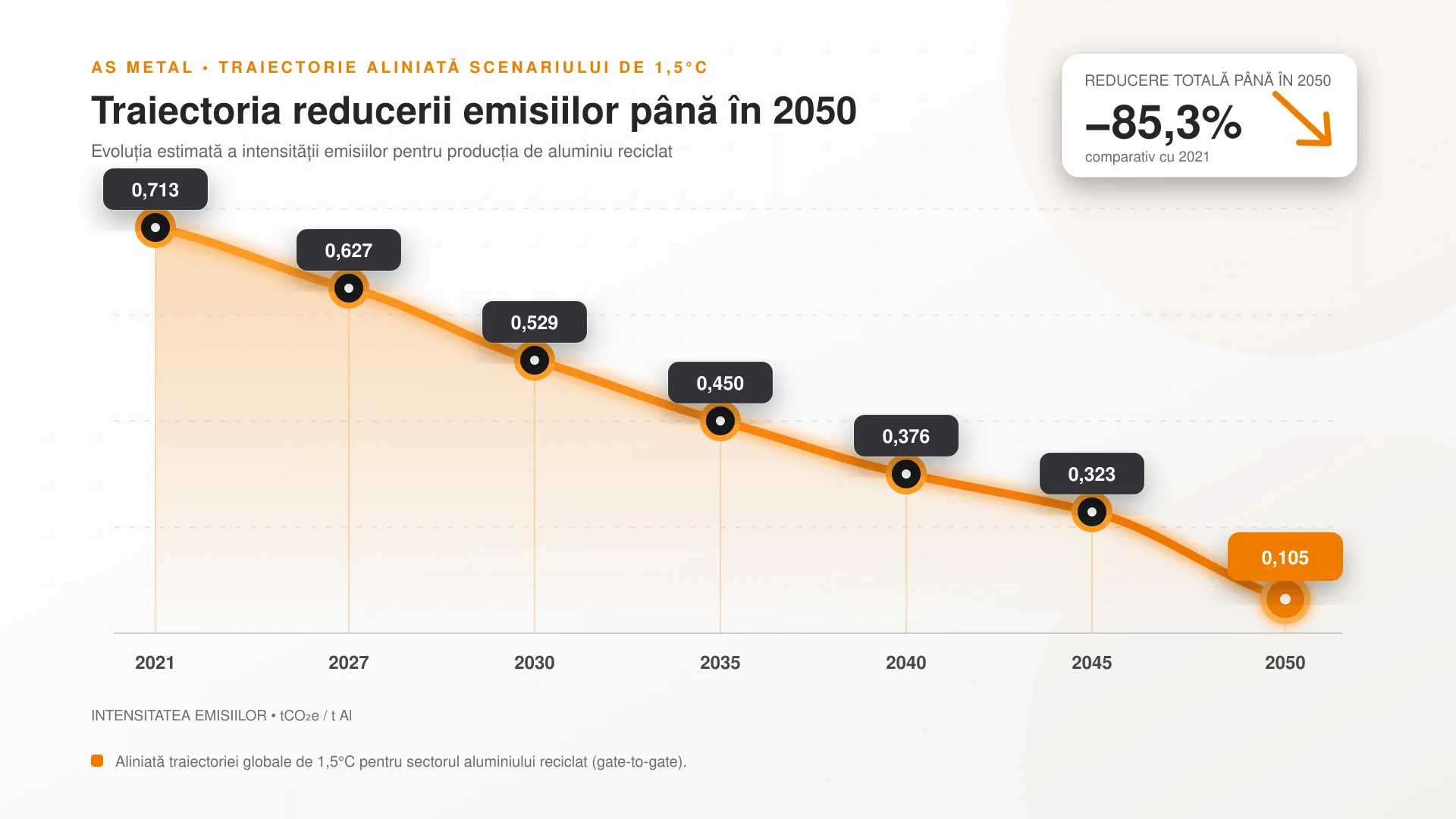
A clear direction toward a low-emissions future
Based on the results of the annual carbon footprint assessment, AS METAL has defined an emissions reduction pathway through 2050, aligned with the global scenario for limiting global warming to 1.5°C.
This pathway is supported by continuous investments in energy efficiency, modern recycling technologies, the optimisation of industrial processes and the development of the circular economy.
The pathway is reviewed periodically to incorporate best practices, technological developments and new regulatory requirements, ensuring a continuous process of improving climate performance.