
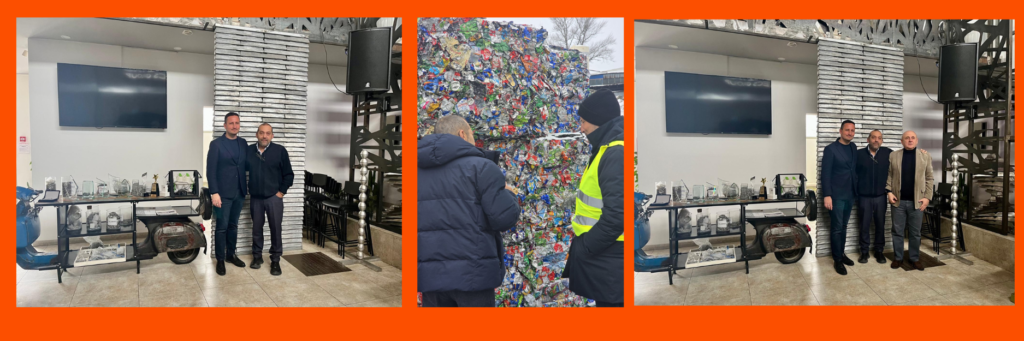
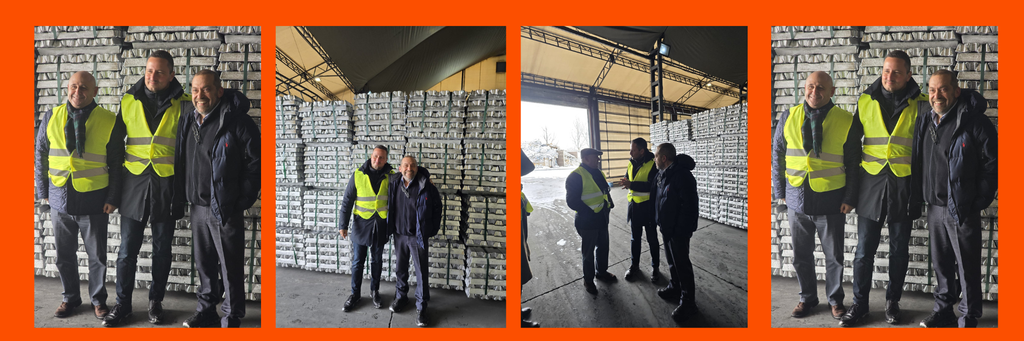
This week, As Metal had the honour of welcoming Nicu Ștefănuță, Vice-President of the European Parliament, on which occasion the entire industrial recycling process was presented.
The visit provided a concrete framework for dialogue between industry and European decision-makers, grounded in on-the-ground realities and the current needs of the European economy.
Continuing the dialogue initiated in Brussels
The meeting is directly connected to the dialogue initiated in Brussels during the mission organised by the Coalition for Circular Economy (CERC) at the beginning of December. At that time, Constantin Apostol, CEO of As Metal, raised the structural challenges faced by the recycling industry.
This continuity of dialogue underlines the importance of collaboration between the private sector, профиль organisations, and European institutions in order to build public policies grounded in real data and industrial experience.
“There is no waste, only resources”
A key message reiterated during the meetings was that there is no waste, only resources that can be reused. Recycling is not only an environmental solution, but also a strategic pillar for:
● resource security in Europe,
● industrial competitiveness,
● reducing dependence on imports of critical raw materials.
By recovering materials already existing in the economy, clear and measurable benefits are achieved: reducing greenhouse gas emissions, lowering energy consumption, and easing pressure on natural resources.
The circular economy, from concept to public policy
This principle, at the heart of the circular economy, formed the basis of the dialogue with representatives of the European institutions and highlighted the need for fair, coherent and predictable policies capable of supporting the investments made by companies that embraced sustainable industrial transformation early on.
Only through an integrated approach, in which legislation, investment and climate objectives are aligned, can the circular economy become a genuine driver of sustainable development in the European Union. Visits such as that of the Vice-President of the European Parliament demonstrate that open dialogue between industry and decision-makers is essential for building a resilient, competitive and sustainable economic future.
As Metal reaffirms its commitment to actively contributing to this transformation through continuous investment, transparency and involvement in the European dialogue on the future of the circular economy.